Items · Wand/Staff/ Arcane · Magical
Phlogiston Rod
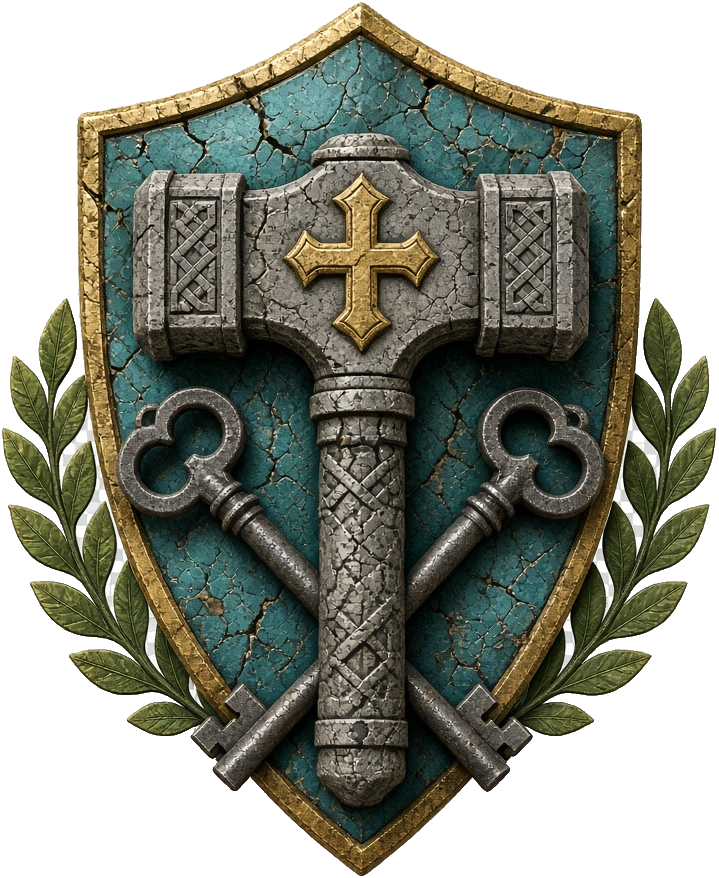
Manufacted during the heyday of the Old World, these rods contain the elemental power of flame.


Codex introduction
Full Item Description
Manufacted exclusively by the enchanters of the Ordo Ignon, each Phlogiston Rod is nearly identical to all of the others produced. It is composed of a two foot long shaft of red alloyed iron and capped with a Bhuj type head. The Bhuj type head is characterized by having six faceted panels made of a durable crystal and with associated mace like flanges. The closest comparison is to a scaled down version of a footman’s morningstar or mace.
The crystal panels in the head of the rod are generally cut from red tassite or red xanthanite. This elemental resonance along with the firestone placed inside the head of the rod grant it it’s impressive fire manipulation powers.
History
Magic was a very common thing during the days of the Old World and as such magic tools and weapons were very common. The Phlogiston Rod was one such tool of that time. The demand for resources during the Empire was vast and entire forests were leveled to fuel it’s hunger for finished metals and fired glasses and porcelains. It was during the middle era of the Empire that the first fire rods appeared. These were more often than not primitive devices, little more than destructive fire spells cast into rods and staves. They were hard to control and were often more dangerous than the normal means of harnessing the power of fire. Other attempts were made, from chaining fire elementals to exotic devices to harness the ambient fire of the sun.
It was considered an accident when the first Phlogiston Rod was created. A rather craft minded enchanter had sought to create a sort of rod of light and improvising with a burnt-out Fire Rod and a Bhuj-type head inspired by a strange fusion of paper lantern and mace head, created the first Rod. Initially the item was intended to be a heating lamp to keep travelers warm and illuminated. A bit of experimenting later discovered that the new rod had the ability to affect the fire properties of mundane materials. With the Rod, a smithy could induce stone to burn rather than using wood, or a kilnmeister could use the rod to cause a piece of unset pottery to burn, effectively curing itself without fuel.
The Rod design was copied and within a decade, the Empire sponsored a guild for the manufacting of these rods. This eased the clear cutting of the forests as well as increasing the ability of the various industrial crafts to improve the quantity and quality of the goods they produced. While never really decreasing in price, the rod became common, even most small villages having a rod or two in their holdings.
The Rod as a Weapon
It is not known who began using the Rod as a weapon, but most accounts would give that person a special place in the nether realms. A Rod ignites the naturally occuring phlogiston in whatever it is used against, and while humans do not have much of the essential fire in their bodies, they have enough. A victim of a rod suffers from internal burns and blood loss from blood vessels and veins bursting. Continual application of the rod can reduce a body to ashes, but given the high water content, this is a rather slow procedure and one that will take 2 to 5 applications to fully kill/cook the victim. Use of the Rod as a weapon was quickly condemned by the Empire as being cruel and inhumane, even by their rather loose standards.
The Fate of the Rods
Most of the Rods were lost or destroyed during the Nightmare War and the dark years that followed. Those few that remain linger as unexplored treasures locking in roal vaults, sit in arcane laboratories or remain hidden in cellars where the current occupant has no knowledge of the tool that was left by their ancestors and forgotten.
Magic/Cursed Properties
All flammable materials contain phlogiston (derived noun form of the Greek phlogistos, meaning flammable), a substance without color, odor, taste, or weight that is liberated in burning. Once burned, the “dephlogisticated” substance was held to be in its “true” form, the calx.
Calx is a residual substance, sometimes in the form of a fine powder, that is left when a metal or mineral combusts or is calcinated due to heat.
A rod can be used to control existing flames, from artistic changes such as flame-sculpting to more practical applications such as increasing heat being produced or causing a very steady and even burn for delicate workings. It can also be used to ignite flammable items, generally simply touching the exposed head of the Rod to the item to be burned. Non-flammable items, such as stone, metal, or the like can be ignited with a rod, though this takes effort (expend a charge, a willpower point, spell point, whatever). Metal burns hot and quickly, while stone burns not as hot but can sustain ignition for a very long time.
The rod can be used to combat elementals, as it is capable of causing severe injuries to most common elementals. Fire Elementals are particularly vulnerable to this Rod as it literally causes their essence to cannibalize itself. While seemingly suicidal, a Rod can be used to ‘detonate’ a fire elemental.
Codex
Gathered submissions
This hub collects similar pieces — an “if you liked this, try these” shelf. Skim the summaries; open a title for a light reading preview, then follow through to the full piece to finish, award XP, or leave a scroll.
1 piece
-


The Old World
Many times the Old World has been mentioned in my works. Submitted for your approval...The Old World.
Scrolls
Twists, chapters, and details meant to stream with the submission — not general discussion.
No scrolls yet — leave one if you have a twist worth keeping.
Sign in to plant an idea scroll.
Enjoyed this? Sign in and cross blades for Scrasamax — five clashes, up to 25 XP.
Sign in to cross the blades.
Discussion
Reader talk, questions, and feedback — not scrolls.
No comments yet — be the first voice in the hall.
Sign in to join the discussion.
Bonds
Outbound links for this Codex live in the gathered list above. Bind as Codex to add another piece to the shelf after you sign in. Kindred Favors gather here too.
No inbound bonds yet — the Codex shelf above is the gathering.
Use alongside
Submissions that pair well with this one at the table.
-
 Markus the Black
Do as thou Will...
-
 Stamagast
Behold, the Harbinger of ill-tidings, the blizzard rider, the thief of winter, the Stamagast.
-
Terat, the Goddess of War
Cowardly maggots! Bow your thrice cursed heads and thank the goddess that you still draw unworthy breath!
Doyenne Unson
-
 Magic as an Attribute
To the winds with memorizing spells and counting mana points.
-
Farrach, Flamekin
In the castle of Stagstone high
from every chimney and fireplace nigh
with a mischievous smile
and the occasional vile
a congenial ember surpises you: 'Hi!'
-
 Clathrates
According to Ars Geotia the standard formations of power consist of ley lines, confluences and founts. this system has been long accepted, and is quite incorrec…
Scrasamax! You took a casual reference from the Roleplay and made it Rock!
Excellent! The Professor would be pleased!
A perfect and practical application of thaumaturgic technology.
Elementials must fear it.
Love it Scras! Great description, great detail, cool powers!
Certainly an item of great possibilities - and a reward for the thinking adventurer.
A decent item although I didn't find anything extremely special about it, but if it is in a roleplay the nuances of it might be lost on me. It is an interesting item though and I found it interesting that it could fire pottery and be used in a smithy to fire the metals. Makes sense that every small village would have one and probably many traveling peddlers and pot fixers. What didn't make sense is that there were that many in the world yet later they were so rare. Seems like something that useful would find a way to stay available regardless of the events...small issue.
I really liked the idea of using them to sculpt flames.
The Phlogiston Rod is a relic of a now almost mythic era. The methods of manufacturing phlogiston rods, including the red alloy iron and crystal inserts, were lost during the Nightmare war. In the intervening years rods were destroyed, depleted of power, lost or forgotten and as such have become rare. The process behind their function, aka magic, suffered a backlash after the war as it was commonly, and correcttly assumed that magic was the cause of the war. For a point of reference, the Nightmare Was would resemble a limited nuclear war, large enough to knock civilization back into a dark age.
It makes much more sense when you put it that way. I underestimated the scale of the war. Thanks!
I really need to make the Nightmare War into it's own submission. I think it is the most frequently referenced event in my writing, that isnt written.
Great stuff!!